
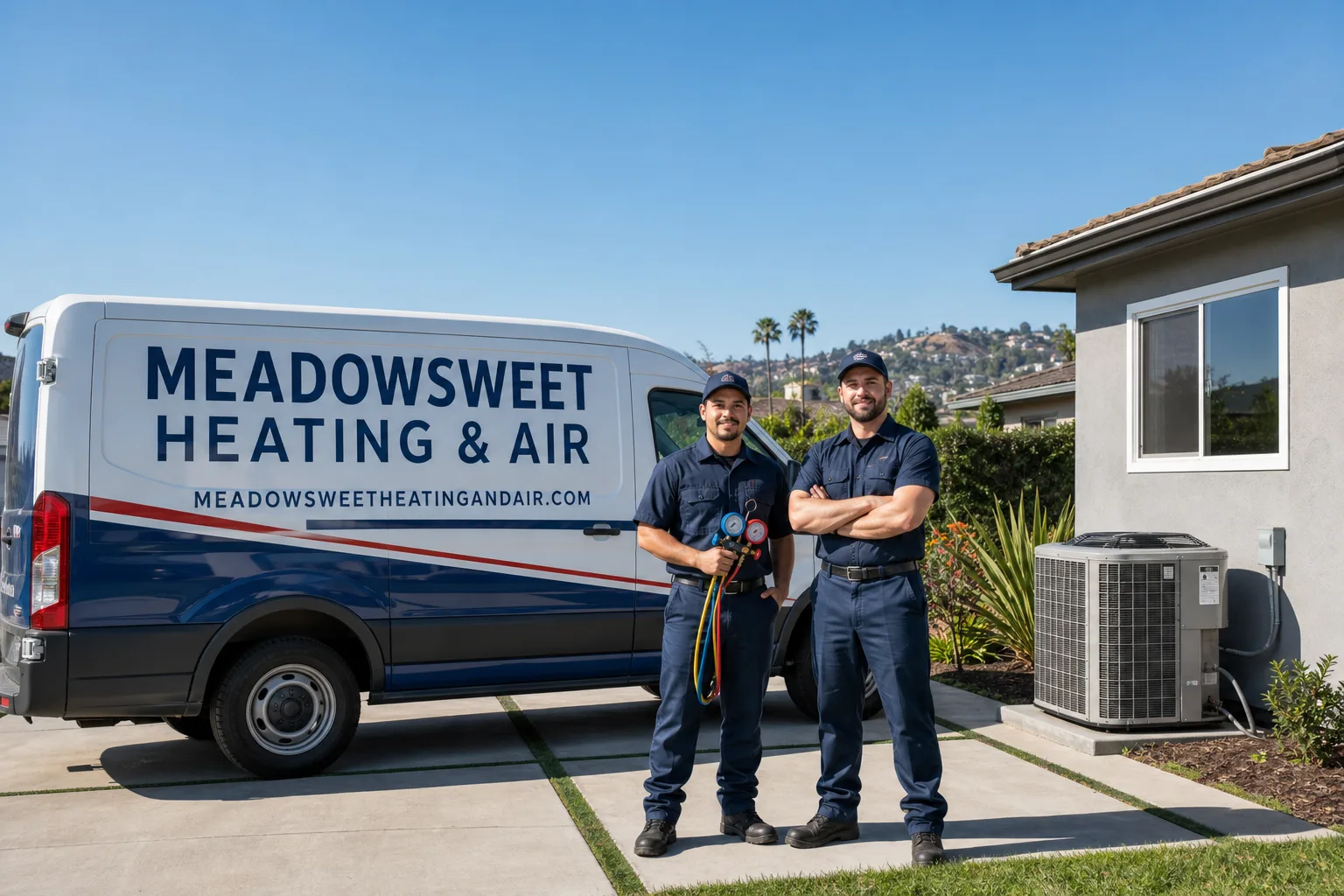
Seasonal tune-up and full diagnostic on your Carrier, Trane, or Goodman system - readings shown to you before any repair is proposed
Diagnosis first, numbers second - you approve the repair price before a single part goes in.







 Before
 After
After Before
 After
After Before
 After
AfterFast, Reliable AC Installation Across Country Club
If you’re searching for AC Installation in Country Club, the price you’ll most likely pay for a standard 2 to 3 ton split system sits between $3,500 and $5,500 before any coated-coil or heat pump upgrades. A full high-efficiency, corrosion-resistant system is going to run $5,800 to $7,500. Those numbers matter because this community’s particular geography changes what “the right system” actually means. Country Club sits directly against the Everglades wetland buffers, which pushes ambient humidity here above what even coastal Miami experiences. That changes sizing, coil selection, and the way return air needs to be handled.
The result is that a copy-paste AC install, the kind where someone matches the old data plate and walks away, tends to fail in specific ways a few years down the road. Mold in the air handler, musty bedrooms, rooms that never cool evenly. Those problems are not random. They’re predictable given the housing stock and the air itself here. Our crews run Country Club every week, and when you call (747) 966-3037, a live person answers. Day, night, weekend. That’s not a claim. It’s the standard for every call that enters this company.
Here’s what to know before you replace a system in this specific part of Miami-Dade.
Why Meadowsweet Heating & Air Is Country Club’s Preferred AC Installation Company
We hold the line on something we call the Cedarwell Care Promise, which comes from being part of a network of HVAC companies founded in 2004. It means a written price lands in your hand before any work begins. No verbal guessing, no “we’ll figure it out after.” It means the crews wear shoe covers and drop cloths go down over floors, stairs, and the path to the air handler closet. It means a photo of the cleanup is taken before the crew leaves your house. And it means every single job is backed by a 365-Day Done Right Promise. If it isn’t done right, we make it right. No runaround.
Luis Serrano leads the crews serving Country Club, and the standards he reinforces are specific. Technicians follow the C.A.R.E. values on every visit: Clean up like it’s their own home, Ask before moving anything in a closet or hallway, Respect the family’s time and quiet hours, and Explain the price before the work. That last one matters when a project involves a heat pump upgrade that costs more than the base quote. The written price reflects exactly the equipment and the labor before anything is ordered.
We know that in this neighborhood, kids are often finishing homework when a tech arrives, or a dog is sleeping under the kitchen table. Our people move quietly, start jobs at the agreed hour, and do not turn a two-hour job into an all-day disruption. The installation work itself is organized around the home’s rhythm, not the crew’s convenience.
Country Club homeowners call us for a reason that has little to do with brand names: we understand that the air here moves differently because of the Everglades. That’s the local knowledge that separates a proper install from one that creates problems later. We’ll get into exactly what that means below.
Furnace Installation in Country Club
Furnace Installation in Country Club is rarely a standalone project. Because this part of Miami-Dade is so heavily oriented toward cooling, most furnace work happens as an add-on when a homeowner is already replacing an aging air handler or wants redundant heating during the handful of genuinely cold winter nights the western suburbs get. Our AC Installation team handles furnace add-ons the same way they handle the cooling side: with a load calculation first, not a tonnage guess.
For Country Club homes built between roughly 1988 and 2005, the heating load is modest. Most need an electric strip package or a compact gas furnace that integrates with the existing closet-mounted air handler. The installed price we see for this work runs $3,500 to $7,500 depending on whether it is a simple strip package coupled with a new air handler or a full furnace and coil replacement. What surprises some homeowners is that the heat side can still affect humidity control in January, because the same blower and ductwork that move cool air in summer are now moving warm air in the few cool weeks Miami-Dade actually gets.
Electric Strip vs. Gas Add-On
Electric strip heat is the more common choice in Country Club. It installs directly into the air handler cabinet, needs no gas line, and is simple to maintain. The tradeoff is higher operating cost per BTU. A gas furnace add-on costs more up front but heats more efficiently. Either way, the decision should come from a load calculation, not from what the previous equipment happened to have.
When a Slab-on-Grade Home Needs Heat
Slab-on-grade CBS construction means there is no crawlspace or basement to absorb heating duct losses, which is actually an advantage for heat distribution. However, the return-air starvation problem that plagues cooling season also affects heating. If the air handler sits in an interior closet with a single undersized return grille, the blower labors and the heat never reaches the far bedrooms. We address that during any furnace add-on by measuring static pressure and, when needed, adding return air rather than blindly reusing the old setup.
HVAC Installation in Country Club
HVAC Installation in Country Club means replacing the system that controls this home’s indoor environment year-round. Given the housing stock here, that is almost always a slab-on-grade, concrete-block townhome or compact single-family home with the air handler in an interior closet and limited attic depth. It means the job is about more than setting a new condenser on the pad. It’s about correcting the airflow problems the original builder put in.
For this community, we quote HVAC installations in the same range: $3,500 to $5,500 for a standard replacement, $5,800 to $7,500 for a coated-coil or heat pump upgrade. The single biggest factor in the final number is whether the homeowner chooses a condenser coil rated for Everglades-adjacent exposure. It adds to the cost. It also typically doubles the outdoor unit’s coil life. We’ll explain that more below.
Dehumidification Is the Real Brief
The cooling load in Country Club is not just about temperature. On a typical August afternoon the outdoor temperature may be 92°F, but the dew point is so high that a system has to remove an enormous amount of moisture before the house even feels cool. An oversized system cools the air so quickly that it never gets to remove that moisture. That is how you get a house that reads 74°F but feels sticky, with condensation forming inside the air handler closet. Sizing properly, usually meaning a half ton smaller than the old builder-grade system, is the most important decision in the whole install.
Return Air and the Second Duct Boot
The single highest-value change we make in these homes is often not the equipment itself. It is adding return-air area. Most original Country Club townhomes have one small return grille in a hallway, and the air handler is wedged into a closet with no additional venting. Static pressure runs high, the blower struggles, and negative pressure pulls in humid outdoor air through every crack and shared masonry wall. Adding a duct boot to a second return drops the static pressure measurably, clears the warm rooms, and stops the musty smell. It’s a small material cost and a large comfort gain. Any AC Installation in Country Club that ignores this is leaving a known local problem on the table.
Trusted Brands We Service in Country Club
We install and service equipment from Trane, Lennox, Goodman, and Rheem, among other manufacturers. For this area specifically, we tend to recommend Trane for their coated-coil options, Lennox for the efficiency range we can get into a closet-mounted air handler, and Goodman and Rheem for straighter replacement jobs where budget is the deciding factor. Parts are stocked in our South Florida hub and dispatched to Country Club throughout the week, so we are not waiting on a regional warehouse if a board or motor fails. The crew that installs the system is the same crew that will be back for the first year’s maintenance.
Common AC Installation Problems We See in Country Club Homes
- Uncoated condenser coils corroding out in under eight years. The constant humidity and salt-laden onshore air from the Everglades side eat standard aluminum fins. We see coils shedding oxide onto the concrete pad by year six or seven, where an inland system would still be running fine at year twelve.
- Contractors matching the old tonnage instead of calculating the load. The builder-grade units in 1988 to 2005 CBS townhomes were routinely half a ton oversized. Swapping in the same size reproduces short-cycling and leaves latent moisture unaddressed. The home cools but stays humid. The fix is a real Manual J calculation, not a data-plate match.
- High static pressure from undersized returns. A new air handler installed into the original interior closet without added return area will often run at 0.8 inches of water column or higher. That strains the blower motor and evaporator coil, and is the direct cause of warm rooms and recurring musty odors. A second return duct boot solves this at low cost.
- Hurricane-season anchoring that was never done. Country Club sits in the cone of recurring tropical systems. Condensers installed on pads without proper tie-downs or on corroded stands shift during high wind events. Our installs include code-compliant anchoring and post-storm inspection as a standard part of maintenance.
Pricing for AC Installation in Country Club, FL
For homes in this area, an AC installation from Country Club generally falls into clear bands. A standard 2 to 3 ton split system swap runs $3,500 to $5,500. If the system is a coated-coil or heat pump upgrade, expect $5,800 to $7,500. A furnace installation as an add-on lands within the same $3,500 to $7,500 window. A simple tune-up or maintenance visit is $80 to $200.
The final number in your estimate comes down to coil selection, whether the return air needs modification, and the efficiency tier you choose. Every estimate is a written, fixed price before we order equipment or open a wall. No surprises. Call Luis Serrano’s team for a free estimate at (747) 966-3037 and we’ll walk the job with you.
| Service | Price Range |
|---|---|
| AC Installation (standard 2-3 ton split system) | $3,500-$5,500 |
| AC Installation (coated-coil / heat pump upgrade) | $5,800-$7,500 |
| Furnace Installation (electric strip or gas, add-on) | $3,500-$7,500 |
| Tune-Up / maintenance visit | $80-$200 |
We Also Serve Cities Near Country Club
Our crews regularly work in Jacksonville, Miami, Tampa, and Orlando. If you’re just outside Country Club proper, give us a call; chances are we’re already running a truck through your area the same week. The pricing bands and installation standards above apply across our whole service footprint.
Serving Country Club, FL - Our Local Coverage Area
We’re based in the Country Club area and know this community well. Use the map below to see our service coverage - if you’re nearby, we can almost certainly help.
FAQs About AC Installation in Country Club
Yes, it does, and the delta is measurable. An uncoated standard condenser coil on a system installed within five miles of the Everglades wetland buffer typically corrodes through in 6 to 8 years, versus 12 to 15 years inland. Salt-laden onshore air combined with near-constant condensation keeps the coil fins wet and oxidizing. The practical fix is a coated condenser coil, which does not eliminate corrosion but adds several years of service here. Call (747) 966-3037 and we can show you the difference on an actual unit before you decide.
You can, but you shouldn’t. The original builder-grade 3-ton systems in Country Club’s 1988 to 2005 CBS townhomes were almost always half a ton oversized for the actual heat load. A like-for-like 3-ton swap will short-cycle, leave latent humidity in the air, and feed mold inside a closet-mounted air handler. The correct approach is a load calculation first; in many of the 1,400 to 1,600 square foot townhomes we serve, that calculation points to a 2.5-ton system. If you’re planning a replacement, call for a free estimate and we’ll run the numbers on your specific floorplan.
Because the new system is pulling humid outdoor air through every crack, often at a higher rate than the old system did, and the moisture ends up condensing inside the air handler and ductwork. The culprit is usually high return-side static pressure from an undersized return grille in the original closet-mounted setup, compounded by the negative pressure across shared masonry walls. Adding a second return duct boot drops static pressure and clears the odor, typically within a week of the modification.
For most homes here, a 15 to 16 SEER2 system is the practical sweet spot. The higher tiers, 18 SEER2 and up, pay back more slowly in a climate where the cooling season is long but utility rates are moderate. The bigger energy and comfort win in Country Club is not the SEER2 number; it’s correct sizing and proper return-air design. A properly sized 15 SEER2 system with addressed static pressure will outperform an oversized 20 SEER2 unit that short-cycles and leaves the house humid.
Every six months, with the pre-summer service in April or May and a post-storm or fall check in October or November. The salt and humidity load on the condenser coil here is severe enough that annual-only service is too long an interval; we find coil washings and static pressure checks every six months keep a new system running well into its second decade. Every tune-up is $80 to $200 and includes a written report of what was found. Call (747) 966-3037 to get on the schedule.
Written by Luis Serrano, Owner at Meadowsweet Heating & Air, serving Country Club and the surrounding Miami-Dade communities.