
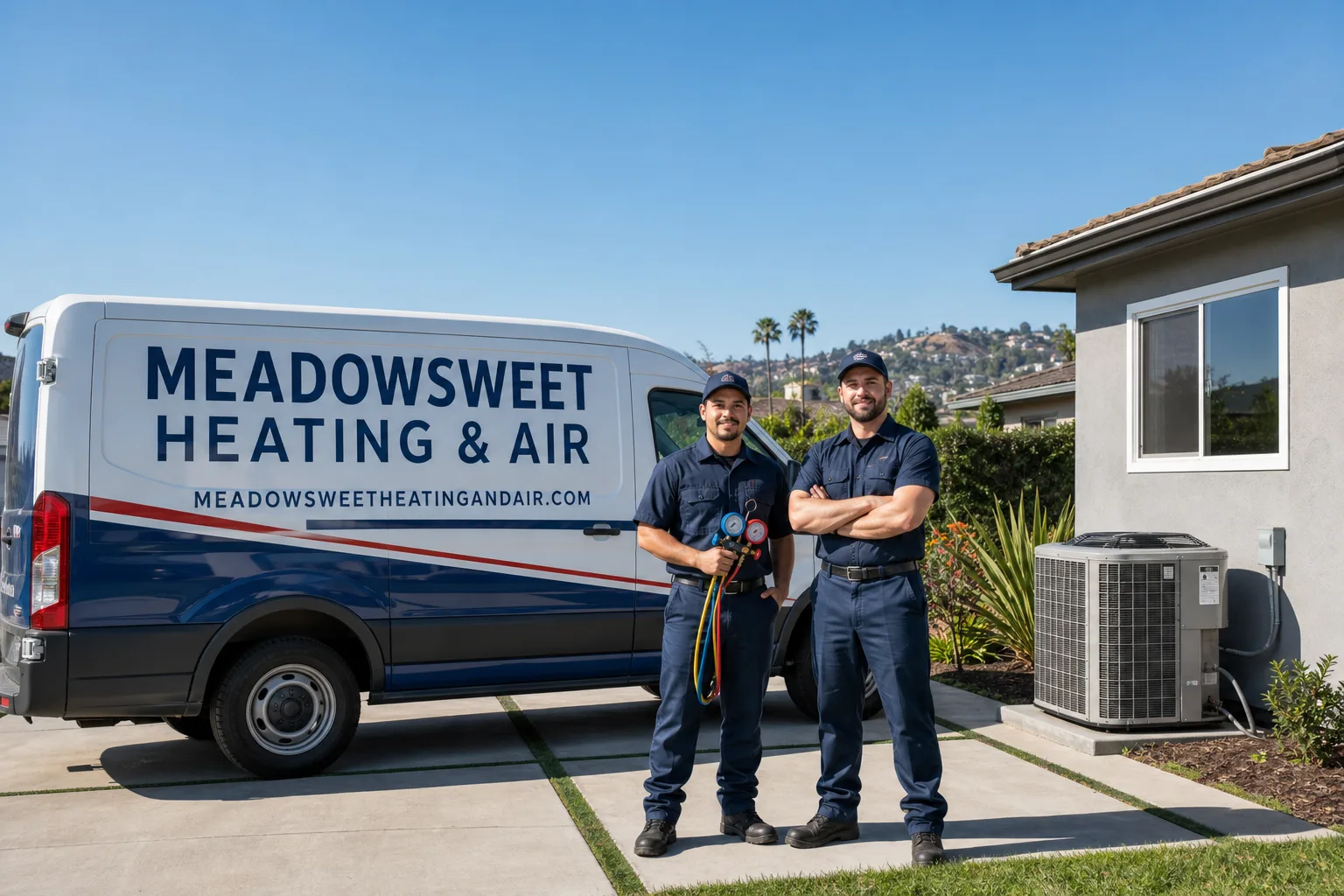
Seasonal tune-up and full diagnostic on your Carrier, Trane, or Goodman system - readings shown to you before any repair is proposed
Diagnosis first, numbers second - you approve the repair price before a single part goes in.







 Before
 After
After Before
 After
After Before
 After
AfterWater leaking around the furnace
What’s Happening
Water pooling around your furnace almost always means one of two things: a clogged condensate drain line or a leaking secondary heat exchanger – both are fixable, and neither should wait. In most cases, the furnace itself is not the source of the water; the condensate system that handles moisture produced during normal operation has backed up or broken down somewhere along the line.
Here’s the slightly counterintuitive part: modern high-efficiency furnaces (typically those with an AFUE rating of 90% or above) produce condensation as a byproduct of pulling so much heat out of the combustion gases. That moisture has to go somewhere – down a drain line, through a condensate pump, and out of the house. When any part of that path gets blocked, cracked, or disconnected, water finds its way to the floor instead. If your furnace is an older, lower-efficiency model that isn’t supposed to produce condensate, water near it usually means the leak is coming from something nearby – a humidifier, the AC evaporator coil above it, or a plumbing line that shares the same utility space.
Why It Happens
Clogged or disconnected condensate drain line
This is the most common cause by far. The condensate drain line is a small PVC pipe that carries moisture away from the furnace. Over time, algae, dust, and mineral deposits build up inside it until the line either slows to a trickle or stops draining entirely. You’ll typically see a steady puddle directly under the furnace, and if you look at the drain line itself, you may notice moisture or discoloration where it connects to the unit. A disconnected line – one that has simply slipped loose from the fitting – looks almost identical but can usually be spotted because the end of the pipe sits an inch or two away from where it should attach.
Failed or undersized condensate pump
Not every home has a floor drain close enough to the furnace for gravity to do the work, so a small condensate pump is installed to push the water uphill or across the room to a drain. These pumps have a float switch that triggers when water rises inside the reservoir – when the pump motor fails, the float switch fails, or the reservoir cracks, water overflows the pump housing and pools on the floor. If the puddle is next to a small plastic box with a tube running into it rather than directly under the furnace cabinet, the pump is almost certainly the source.
Cracked secondary heat exchanger or flue issues
High-efficiency furnaces have a secondary heat exchanger – a second set of coils that extracts additional heat from exhaust gases before they leave the system. If this component cracks or develops a pinhole, condensate that should drain properly instead leaks into the cabinet and eventually out onto the floor. This one matters more than a clogged drain line because a cracked heat exchanger can also allow combustion gases to mix with the air in your home. If you smell anything unusual – a faint chemical or exhaust odor – alongside the water, stop using the furnace, leave the area, and call us at (747) 966-3037. That combination of symptoms warrants immediate professional attention, not a DIY check.
Humidifier or evaporator coil overflow
If your system includes a whole-home humidifier mounted to the furnace, that unit has its own water supply line and drain pan – either of which can leak and look exactly like a furnace leak from a few feet away. Similarly, if your AC evaporator coil sits in the air handler above the furnace, a clogged coil drain pan will drip down into the furnace compartment and out the bottom. Look at whether the water is coming from inside the furnace cabinet itself or dripping down from something mounted above it. That difference tells a technician a lot before they even open a panel.
What to Do Right Now
- Turn the furnace off at the thermostat. Set it to “off” rather than just dropping the temperature. Running the system while water is pooling risks water reaching electrical components inside the cabinet.
- Take a photo of the puddle before you touch anything. Show where the water is relative to the furnace cabinet, the condensate pump (if you can see one), and any visible drain lines. This genuinely helps a technician diagnose the problem faster when they arrive.
- Mop up standing water near the unit. This protects your floor and makes it easier to see where new water is coming from. Lay a dry towel down and check it in 15 minutes – if it’s wet again, the source is still active.
- Check whether the condensate pump reservoir is overflowing. If you can see the pump, look at whether the plastic reservoir is filled to the top or spilling over. Do not reach into the unit or disconnect anything – just observe and note what you see.
- If you smell exhaust, gas, or anything chemical near the furnace, stop here. Leave the area, get everyone (kids, pets) out of that part of the house, and call (747) 966-3037. A cracked heat exchanger with combustion gas involvement is not something to troubleshoot yourself – it requires a trained technician with the right instruments.
How We Fix It
When your local Meadowsweet Heating & Air technician arrives, the first thing they do is trace the water back to its actual source – not just the spot where it’s pooling. That means checking the condensate drain line for blockages, inspecting the condensate pump and its float switch, looking at the secondary heat exchanger for cracks, and ruling out the humidifier or evaporator coil if either is present.
Before any work starts, you’ll have a written price in hand. That’s not a policy we bend – it’s how every Meadowsweet visit works, every time, in line with the Cedarwell Care Promise.
Most condensate repairs – clearing a clogged line, reseating a disconnected fitting, or replacing a failed pump – are completed in a single visit. A cracked heat exchanger is a more involved furnace repair and may require a follow-up appointment depending on parts availability, but your technician will tell you exactly what’s needed before touching anything. Shoe covers and drop cloths go down at the start. A photo of the clean work area goes to you before the crew leaves.
Frequently Asked Questions
It depends on what’s causing it. A clogged condensate line is a nuisance, not an emergency – though it can damage flooring if ignored for days. A cracked heat exchanger is a different story: if combustion gases are escaping into your living space alongside the leak, that’s a safety issue that needs same-day attention. When in doubt, turn the furnace off and call (747) 966-3037 – a live person answers every call, around the clock, and can help you decide how urgent your situation is.
Call (747) 966-3037 and your local Meadowsweet Heating & Air team will let you know the earliest available time – a live person picks up 24 hours a day, 7 days a week, including nights, weekends, and holidays. We don’t route you to voicemail. If the furnace is off and you have no heat, tell us that when you call – it helps us prioritize.
Most water-related furnace problems are repairs, not replacements. A clogged drain line or a failed condensate pump are relatively minor fixes. A cracked secondary heat exchanger is more serious, and on older systems it sometimes makes more financial sense to replace the furnace rather than the heat exchanger – but your technician will lay out both options with written prices for each before you decide anything.
Possibly, but a trained technician can usually tell quickly. Water sitting near the circuit board, the inducer motor, or the blower motor can cause problems that aren’t immediately obvious. That’s one reason it’s worth getting someone out sooner rather than later – catching secondary water damage early is a lot less costly than discovering it after it has had time to work. Call (747) 966-3037 to get your local team scheduled.
Get It Fixed
Call (747) 966-3037 – a live person answers day or night – or book online. Your local Meadowsweet Heating & Air team will diagnose the source of the water, give you a written price before anything starts, and leave the space cleaner than they found it.
Written by Luis Serrano, Owner & Lead HVAC Technician at Meadowsweet Heating & Air, part of the Cedarwell family of companies since 2004.
What Our Customers Say
"New system install. They protected the hallway floor all the way to the attic and vacuumed after. Worked quietly around my work calls. Not a trace left behind."
- Rosalind Okeke"AC repair in July. The tech laid a mat down by the indoor unit and wore booties through the house. Fixed it fast and left zero mess. Quiet and kind, good with our nervous dog too."
- Delia Frost"Good repair and a very tidy, respectful tech. The appointment window was wide and he came near the end of it, but he texted ahead. Work itself was clean and done right."
- Nadine Oakley