
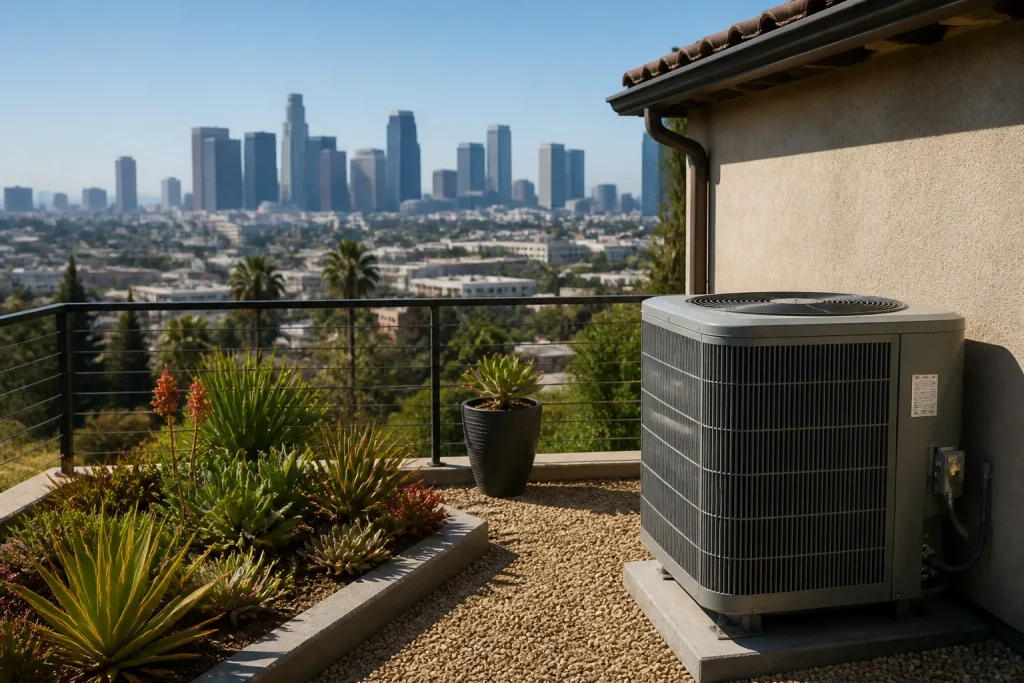
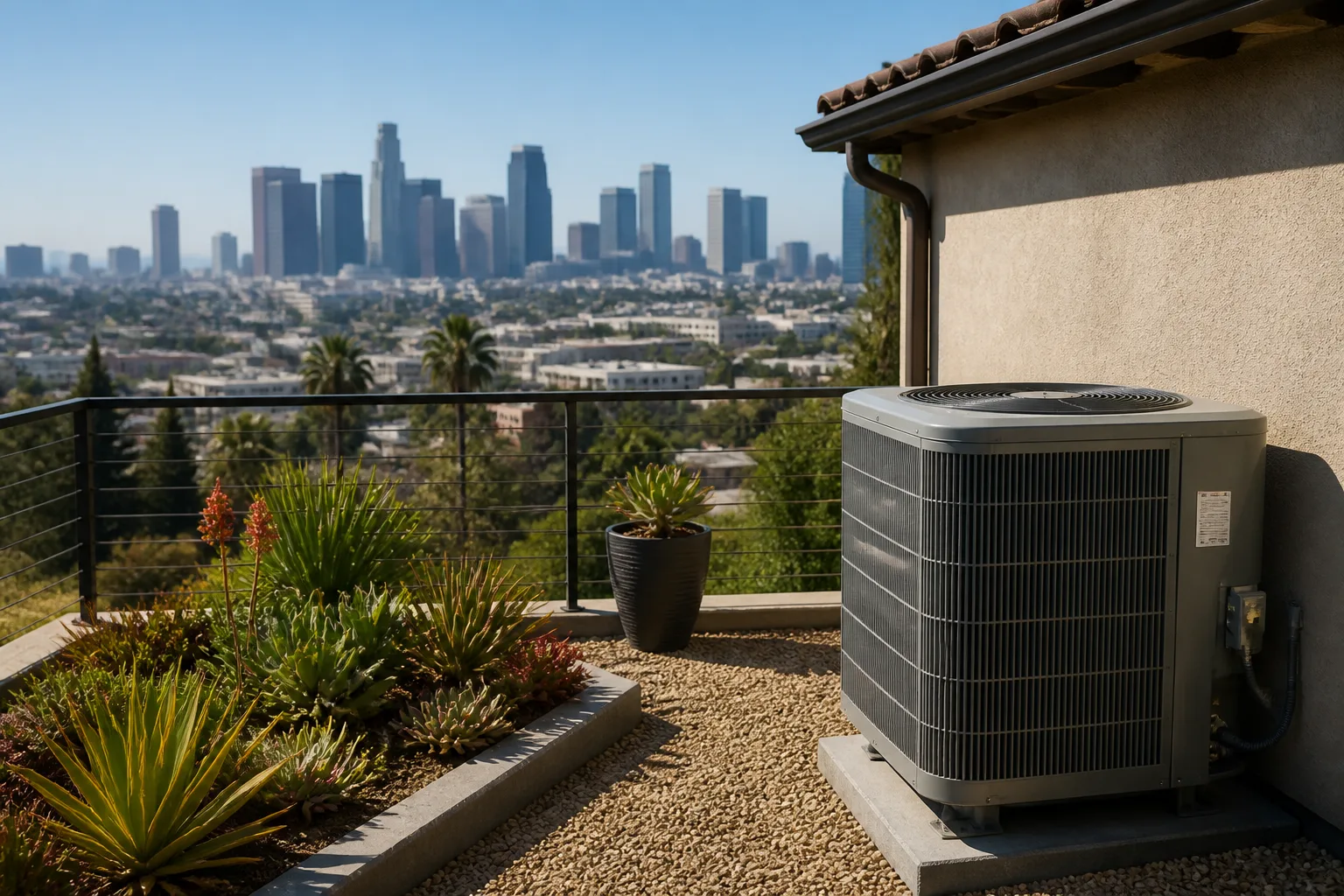
Carrier AC Repair in Los Angeles: A Homeowner’s Guide
Carrier AC repair in Los Angeles costs between $185 and $600 for most common failures, with the real variable being whether your system is a conventional WeatherMaker or a communicating Infinity model. Infinity systems use proprietary digital wiring that changes how problems get diagnosed, and a technician who treats one like a standard AC can easily misread the fault and replace the wrong part. If you’d rather skip the research and just get a straight answer, call us at (747) 966-3037 for a free estimate. Otherwise, here’s what every LA homeowner with a Carrier should know before the first tool comes out.
On a Carrier Infinity system, a failing control board in the air handler can generate a fault code that looks exactly like a refrigerant leak. Replacing refrigerant on a communicating system that actually has a board problem fixes nothing and costs around $400. That’s the kind of mistake we see too often when someone calls us for a second opinion, and it’s the reason this guide exists.
Why Carrier Infinity Systems Confuse Standard Technicians
Most air conditioners are simple. The thermostat sends a low-voltage signal, the condenser turns on, the blower moves air. If something fails, you trace the wire and find the bad component. Carrier’s Infinity series abandoned that wiring model entirely. Instead of individual control wires, the thermostat, air handler, and condenser share a digital data line. They talk to each other constantly, exchanging temperatures, pressures, fan speeds, and diagnostic data.
That’s a genuinely good design when it works. But when one component fails, it often throws fault codes on the other components too. A condenser problem shows up as an error on the thermostat. A thermostat glitch triggers a code on the air handler. The cascade confuses technicians who haven’t been trained on Carrier’s communicating protocol.
Here’s the question every Los Angeles homeowner should ask before booking a Carrier repair:
“Walk me through how you diagnose an Infinity communicating system when there are fault codes on multiple components.”
A technician who knows Carrier will explain that they start by reading the primary fault from the component that originated it, not the one that displayed it. A technician who hesitates, or tells you they’ll “figure it out when they get there,” may be learning on your dime. We service Carrier, Trane, Lennox, Goodman, Rheem, York, Daikin, and Bryant, and our techs get specific training on communicating systems before they’re sent to an Infinity job alone.
The Three Carrier Fault Codes LA Homeowners See Most in Summer
Los Angeles summers push Carrier systems hard. When your AC runs for six hours straight in August, small problems become fault codes fast. These are the three we see most often in LA homes, and what they actually mean versus what they’re often misdiagnosed as.
Fault Code 33: High Pressure Trip
Code 33 means the condenser shut down because pressure got too high. The common misdiagnosis is “low refrigerant,” because a tech hooks up gauges, sees pressure readings that look off, and adds refrigerant. But high pressure trips are usually caused by something simpler: a dirty condenser coil, a failed condenser fan motor, or restricted airflow. On a 100-degree day in Van Nuys, a coil caked with six months of dust and pollen will trip on high pressure even with a perfect charge. Adding refrigerant to that system makes it worse. The right fix starts with cleaning the coil and testing the fan motor before anyone touches the refrigerant line.
Fault Code 45: Control Board Communication Failure
On an Infinity system, code 45 means the control board in the air handler lost communication with the rest of the system. Here’s where the misdiagnosis cascade happens: the board glitches, the system read errors on the condenser side, and a tech concludes there’s a refrigerant leak because the pressures look strange. They recover the refrigerant, vacuum the system, recharge it, and hand you a $400 bill for work that changed nothing. The board is still failing. The correct diagnostic path for code 45 is to power down the system, check the data line connections, and test the board itself before condemning anything else.
Fault Code 79: Indoor Blower Motor Fault
Code 79 points to the variable-speed blower motor in the air handler. The most common false read here is replacing the motor when the real issue is the motor’s control module. On Carrier’s variable-speed blowers, the motor and the control module are separate parts, and the module fails more often than the motor itself. A technician who replaces the whole assembly is billing you for parts you didn’t need. The honest approach is to test the module in isolation first. That’s a $150 to $300 part instead of a $700 to $1,100 motor assembly, and the difference matters on a warm night in Silver Lake when you’re trying to get the kids to sleep.
WeatherMaker vs. Infinity: Know What You Have Before You Call
Carrier makes two main residential AC lines that show up in Los Angeles homes, and the repair approach differs enough that you should confirm which one you have before calling for service.
WeatherMaker is Carrier’s conventional line. It uses standard thermostat wiring, standard components, and parts that any skilled HVAC technician can source quickly. Repairs are straightforward, parts are widely available in LA, and labor costs stay on the lower end of the range. If your thermostat has basic buttons and a simple display, you likely have a WeatherMaker.
Infinity is the communicating system described above. The thermostat is a touchscreen with a distinctive blue interface, and it typically displays the Carrier Infinity logo. Repairs cost more because the parts are proprietary and the diagnostic process requires Carrier-specific knowledge. Parts can also take longer to source, which we’ll cover next.
To confirm which system you have, look at your thermostat. If it’s branded “Infinity” or “Infinity System Control,” that’s a communicating unit. If it shows a generic Carrier logo with basic up/down buttons, it’s likely a WeatherMaker. Write that down before you call anyone. It changes the conversation completely.
Los Angeles has a mix of both, and we regularly see Infinity systems in homes built after 2008, especially in neighborhoods like Porter Ranch, Studio City, and the newer developments in Playa Vista. WeatherMakers are more common in older homes throughout the Valley and Mid-City.
Parts Lead Times for Infinity Control Boards in the LA Market
This is the part nobody warns you about. A Carrier Infinity control board is not a part you can pick up at a supply house on a Saturday afternoon in Los Angeles. Depending on the model and the board revision, lead times run 2 to 7 business days. Sometimes longer during summer peak demand.
A reputable company will tell you this before you approve the repair. They’ll give you the honest timeline: we order the part, we confirm the date it ships, we schedule a return visit, and we tell you what to do in the meantime. In a heat wave, that might mean temporary cooling options or prioritizing the order with expedited shipping when available.
What you should not hear is a technician who “thinks” the part might be in stock, orders it anyway, and then goes quiet for a week. Or one who tries a used board from a salvage unit because it’s faster. Used control boards carry no warranty and often fail within a season.
This is also where the written price standard matters. Before we order any Infinity part, you get a line-item estimate in writing: diagnostic charge (if any), the exact part number, the part cost, the labor to install and configure it, and the total. No ranges. No “we’ll see when we get in there.” A real price in dollars, on paper, before work begins. If a company won’t do that for a $500-plus control board repair, call someone else.
What a Written Price and a Real Guarantee Look Like on a Carrier Repair
Carrier repairs in Los Angeles vary enough that the price conversation should happen before any work is approved. Here’s what a written estimate for a typical Carrier repair should name, in dollars, line by line:
- Diagnostic fee: $89 to $129, often waived if you approve the repair. We include it upfront so there’s no surprise line at the bottom.
- Capacitor replacement: $185 to $275 installed. A common failure on older WeatherMaker condensers.
- Condenser fan motor: $350 to $550 installed, depending on horsepower and whether it’s a variable-speed or fixed-speed motor.
- Contactor replacement: $140 to $220 installed. Simple part, but important to use the right amperage rating for your specific Carrier model.
- Infinity control board: $550 to $900 installed, including the part, programming, and system re-communication testing.
- Thermostatic expansion valve (TXV): $400 to $650 installed, including refrigerant recovery, evacuation, and recharge.
Every line on our estimate is a fixed before-tax dollar amount. You approve the number, you get that number. No hourly billing surprises, no “it took longer than expected” phone calls. That standard is part of the Cedarwell Care Promise, which also includes a Done Right Promise on every Carrier repair completed. If it’s not done right, we make it right. No runarounds, no fine print.
When we’re inside your home, the crew wears shoe covers and lays down drop cloths so your floors, play areas, and pet zones stay clean. We ask before moving anything, we respect quiet hours for sleeping kids, and we send a photo of the clean-up before we leave. That’s the C.A.R.E. values code: Clean up like it’s our own home, Ask before moving anything, Respect the family’s routines, Explain the price before the work. Those aren’t extras. They’re the standard.
When to Call a Pro for Carrier AC Repair in Los Angeles
If your Carrier is showing a fault code, making a noise it didn’t make last week, blowing warm air, or short-cycling on hot afternoons, that’s the moment to call. Don’t wait for the system to fail completely on a 95-degree day, because that’s exactly when every LA HVAC company is booked out for days.
We pulled an Infinity control board out of a house in Tarzana last summer where the homeowner had been resetting the breaker for three weeks to clear a code 45. By the time we got there, the board had failed completely and the condenser had been running without proper communication for long enough that it damaged the compressor start components. The repair cost more than it would have if he’d called when the code first appeared.
Carrier systems, especially Infinity models, give you warnings. The codes are not random. Read them, write them down, and call someone who knows what they mean.
Related services in Los Angeles: AC Repair in Los Angeles | Furnace Repair in Los Angeles | AC Installation in Los Angeles
The Bottom Line
Carrier AC repair in Los Angeles comes down to three things: knowing whether you have a WeatherMaker or an Infinity system, finding a technician who understands communicating-system diagnostics, and getting a written price before anything gets taken apart. Fault codes 33, 45, and 79 are the summer standbys, and each one has a misdiagnosis pattern that costs homeowners real money. The Infinity control board lead time is 2 to 7 business days in LA, and an honest company tells you that upfront. A written estimate should name every part and labor charge in dollars before you agree to anything.
If you’re in Los Angeles and your Carrier isn’t cooling like it should, Meadowsweet Heating & Air home offers free estimates and a Done Right Promise on every repair. Call (747) 966-3037 and a live person answers, 24/7. No voicemail queue, no phone tree, just a straight answer.
Frequently Asked Questions
Most Carrier AC repairs in Los Angeles run between $185 and $600, with common fixes like capacitors at $185 to $275 and condenser fan motors at $350 to $550. Infinity control boards run $550 to $900 installed because the part is proprietary and the programming requires Carrier-specific training. Call (747) 966-3037 for an exact quote, estimates are free.
Fault code 45 on a Carrier Infinity system means the control board in the air handler lost communication with the rest of the system. It’s often misdiagnosed as a refrigerant leak because the pressure readings look abnormal during the communication failure, but adding refrigerant to a board problem wastes about $400 and fixes nothing. A qualified technician will test the board and data line connections first.
Look at your thermostat. If it has a touchscreen with the Carrier Infinity logo, you have an Infinity communicating system. If it has basic buttons and a simple display, it’s likely a WeatherMaker. Knowing which one you have before calling for service helps the technician bring the right diagnostic tools and gives you a more accurate estimate over the phone.
As a rule of thumb, if your Carrier is over 12 years old and the repair estimate exceeds 40% of the cost of a new system, replacement is worth considering. A failed compressor or a leaking evaporator coil on an older WeatherMaker often tips that equation. But a control board failure or capacitor replacement on an otherwise healthy 8-year-old system is almost always worth repairing. We’ll give you the honest math either way. Call (747) 966-3037 and we’ll talk through it.
Written by the team at Meadowsweet Heating & Air.
Need HVAC Help?
Call Meadowsweet Heating & Air - licensed & insured, here with fast after-hours help in Los Angeles.
(747) 966-3037